
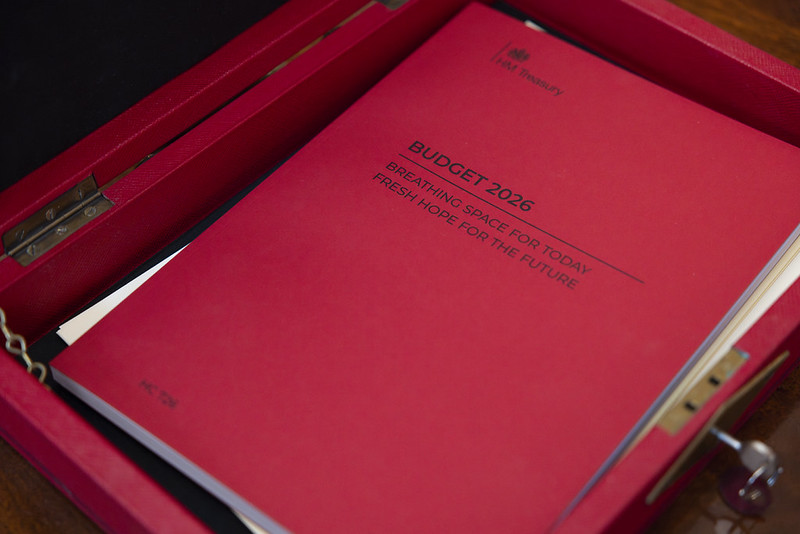
The short answer: the Autumn Budget 2026 did not raise the main rates of Income Tax or National Insurance, but tax thresholds stay frozen. Minimum wages rise from April 2027. Households in Council Tax bands A to D in England get a £100 energy payment from January 2027. The Cash ISA limit stays at £20,000, tax on savings interest outside ISAs rises from April 2027, and first-time buyers get a new "Your First Home" scheme. Below, we explain what changed, what stayed the same and what it means for you.
The Autumn Budget has landed. And within minutes, the headlines were full of tax changes, giveaways, winners, losers and billions of pounds of Government spending. But most of us have a much simpler question:
What does this actually mean for me?
That depends on where you are in life. Are you working? Saving? Buying your first home? Running a business? Caring for someone? Planning for retirement?
So rather than take you through every announcement, we've pulled out the changes most likely to affect your everyday finances, major life decisions and longer-term wealth building.
Jump to the section that sounds like you.
UK Autumn Budget 2026 Summary - The Bigger Picture
The cost-of-living squeeze isn't over yet.
The Office for Budget Responsibility expects the UK economy to grow by 1.2% in 2026, slowing to 1.0% in 2027, before strengthening again.
Inflation is forecast to average 3.4% in 2027, after peaking at around 3.8% in early 2027, before falling back towards the Bank of England's 2% target. Household disposable income per person is also expected to remain under pressure.
Household Bills & Transport
Energy: £100 Support & Cheaper Bills
The energy price cap is expected to jump by 27% in January. The government will provide the following support:
- £100 Household Energy Payment for all households in Council Tax bands A to D in England from January 2027. Local councils will pay it straight into bank accounts through the Council Tax system from January 2027. Scotland, Wales and Northern Ireland are yet to confirm how this will be delivered.
- Gas standing charges scrapped. The Government plans to remove gas standing charges by the end of 2027, or as soon as possible afterwards. This is a daily tariff added to gas bills, no matter how much gas you use.
- 0% VAT rate on domestic electricity has also been extended until the end of June 2027 - it was originally only supposed to be until 31 March 2027. This means you will not have to pay VAT on top of the electricity you use. The Government estimates this will reduce the annual Ofgem price cap by around £50 from April 2027.
Driving?
- The temporary 5p-per-litre fuel duty cut has been extended to 30 June 2027, delaying the planned increase until 1 July 2027.
- And if you use your own car or van for work, the approved mileage rate of 55p per mile for the first 10,000 business miles is now permanent. From April 2027, the rate above 10,000 miles rises from 25p to 35p per mile. These are HMRC tax-free / tax-deductible mileage rates for qualifying business travel - not an automatic payment for commuting.
Taking the bus?
- Eligible single bus fares in England outside London will be capped at £2 throughout 2027, replacing the current £3 cap.
Working & Earning
Minimum wages are rising
From April 2027:
- National Living Wage for age 21+ rises to £13.21 an hour
- National Minimum Wage for 18 to 20-year-olds rises to £11.27
- the rate for 16 to 17-year-olds and eligible apprentices rises to £8.31.
For someone working full time on the National Living Wage, that means a meaningful increase in gross pay. But remember: Gross pay isn't the same as money in your bank account. Income Tax, National Insurance, pension contributions, student-loan repayments and changes to benefits can all affect what you actually keep.
Income Tax rates haven't risen, but fiscal drag still matters
The headline rates of Income Tax and National Insurance haven't increased. But key tax thresholds remain frozen. That means that as salaries rise, more income can gradually become taxable, or move into a higher tax band.
This is known as fiscal drag.
Saving & Investing
The £20,000 Cash ISA limit stays
The Government has reversed its previous plan to reduce the Cash ISA allowance to £12,000. The Cash ISA limit remains at £20,000 a year, within the overall ISA rules. That's important because...
Tax on savings interest is rising
From April 2027, the tax rates applying to taxable savings income become:
- 24% for basic-rate taxpayers
- 44% for higher-rate taxpayers
- 49% for additional-rate taxpayers.
The Personal Savings Allowance still exists, so this does not mean everyone suddenly pays tax on their savings, but your allowance depends on tax band and is not available to every taxpayer.
If you hold larger amounts of cash outside an ISA, it becomes increasingly important to think about where your savings are held, not just the interest rate you're getting.
A Landlord or Renter?
There wasn't a Budget announcement changing how much landlords can charge in rent. The big change is to tax on property income. From April 2027, in England, Wales and Northern Ireland, the rates applying to taxable property income become:
- 24% basic rate
- 44% higher rate
- 49% additional rate
What does that mean for landlords?
Don't judge whether your property is a good investment by simply saying: “It brings in £1,500 a month.” Look at the return after all the costs, including your own time, empty periods, then consider what return you are earning on the capital tied up in the property.
And if you're renting?
This tax change doesn't automatically mean your rent rises.
But rising tax, financing and regulatory costs can affect the economics of being a landlord. Some owners may reconsider whether to remain in the market, while others may seek higher rents where the market allows.
Buying Your First Home?
NEW - "Your First Home" scheme
The new Your First Home scheme will help eligible first-time buyers purchase participating new-build homes in England. You could combine:
- a deposit of at least 2.5% of the purchase price
- a mortgage from a participating lender
- a government equity loan worth 20% of the purchase price, interest free for 5 years
It means some people who previously couldn't get a mortgage now CAN. For example, those with a deposit that's so small they were unable to get a mortgage.
It might make the initial cost of homeownership cheaper. A smaller mortgage may affect the rates available, but approval and pricing depend on lender criteria and your circumstances. As the equity loan will be interest-free for the first five years, it should help with initial monthly costs.
Eligibility rules apply. Pre-registration is due by the end of December 2026, applications from February 2027 and the first loans from April 2027. Check repayment requirements and fees. Find out more here.
Lifetime ISA changes
From 29 October 2026, a first-time buyer using a Lifetime ISA to purchase a home above the current £450,000 property cap will face a reduced withdrawal charge of 20% rather than 25%. The normal 25% charge remains for other unauthorised withdrawals.
NEW First Time Buyer ISA is coming
From April 2029, a new First Time Buyer ISA will replace the Lifetime ISA for new savers. Existing Lifetime ISA holders will be allowed to keep their accounts and continue contributing under the existing rules. Aged 18 to 39? You can therefore still open a Lifetime ISA before the new product arrives.
Parents, Families & Carers
Life events often have a much bigger impact on our finances than investment returns do. This Budget includes some changes aimed at people whose income is affected by caring responsibilities.
More parental support for the self-employed
From April 2029, eligible self-employed fathers, partners and adopters will gain access to parental pay for the first time.
Around 150,000 self-employed partners who aren't currently entitled to statutory parental pay will be eligible for two weeks' support worth up to £194 a week.
That's important because self-employed families have historically had much less access to this support.
Carer's Allowance cliff edge will eventually change
Currently, carers can lose their entire Carer's Allowance if their earnings move above the permitted limit.
From 2030 to 31, the Government plans to introduce a "taper" so the benefit gradually reduces instead. That's a significant improvement in how the system works. But remember: it isn't happening yet.
Don't change your working arrangements today based on a future rule.
Side Hustles, Self-employed & Business Owners
There are several changes here, depending on where you are in your business journey.
Starting a side hustle or business?
Currently, if you earn more than £1,000 a year (gross income) by working for yourself - including through self-employment or "side hustles"', you need to declare it to HMRC so that it's tax-free. From April 2027, this "Trading Allowance" rises from £1,000 to £3,000, meaning fewer people will have to file tax returns. The Self Assessment reporting threshold for trading income also rises to £3,000.
That could make life simpler for people testing a small business, freelancing or earning modest additional income.
But remember: turnover isn't the same as profit. If you have significant allowable expenses, using the Trading Allowance isn't automatically the most tax-efficient option.
New Founders' Relief is also being introduced for qualifying founders of high-growth businesses. It offers a 10% Capital Gains Tax rate on qualifying gains up to a £10 million lifetime limit. This is a specialist relief with detailed eligibility conditions, not something that will apply to every business owner.
Run a shop, café, salon or hospitality/leisure business?
There is additional help with business rates in England. From April 2027, qualifying retail, hospitality and leisure properties with a rateable value up to £18,000 can receive 100% Small Business Rates Relief, up from £12,000.
Relief then tapers for qualifying properties up to a rateable value of £21,000. Eligible businesses will also have business-rate increases capped at inflation for two years. Check the rateable value of your premises, rather than assuming eligibility based on your rent.
Investing in equipment for your business?
There are also changes to capital allowances, essentially the tax relief businesses can receive when investing in qualifying equipment and machinery.
For qualifying business investment that does not already receive 100% relief, the main First Year Allowance rises from 40% to 50% from January 2027. The annual writing-down rate on remaining main-pool balances then falls from 14% to 12%.
At the same time, the annual writing-down allowance on remaining main-pool expenditure falls from 14% to 12% from April 2027.
Some businesses will be able to receive more tax relief upfront when they invest, while the remaining relief may be spread more slowly afterwards. If you're planning a significant purchase, it could be worth discussing the timing with your accountant before committing.
Thinking about eventually selling your business?
The lifetime amount of gains eligible for Business Asset Disposal Relief (BADR) falls from £1 million to £500,000 from April 2027. The BADR CGT rate remains 18%.
Students & Student Loans
Interest on Plan 2 and Plan 3 student loans is capped at 6% from September 2026 until August 2027.
That reduces how quickly balances grow for some borrowers.
But it does not automatically mean you should make voluntary overpayments. Student loans don't work in exactly the same way as ordinary consumer debt. Repayments depend largely on your earnings and your repayment plan, and some borrowers won't repay the full balance before it is eventually written off.
Retirement & Later Life
There are two different stories here: support for pensioners sooner and a bigger policy change later.
New Pension Tax Allowance
From April 2027, a new Pension Tax Allowance will protect pensioners whose total income is no more than the full new State Pension from small Income Tax bills caused simply by the State Pension moving above the Personal Allowance.
The allowance will then taper for people with somewhat higher incomes.
The Triple Lock changes from 2030
The existing Triple Lock remains during this Parliament. From April 2030, the system changes.
The State Pension will rise by the highest of:
- inflation
- 2.5%
- the increase required to maintain its value relative to average earnings.
The intention is to stop the State Pension continually growing faster than wages while still providing protection against inflation and falling behind earnings.
Benefits & Social Welfare
For Universal Credit, the Budget keeps the surplus earnings threshold at £2,500 for a further year, until the end of March 2028. It also confirms £100 million of funding for the Jobs Guarantee for eligible 18 to 24-year-olds on Universal Credit.
There are smaller changes and wider welfare reforms continuing, including around employment, caring and disability support. Some of those reforms won't take effect for several years.
So… are you better or worse off?
For most people, there isn't one simple answer.
- Some changes affect your monthly cash flow.
- Others affect how you build wealth.
- Others only matter when you reach a major life event.
- And many of today's announcements don't actually start until 2027, 2029 or 2030.
So rather than asking: “Did I win or lose from the Budget?”
Ask: “Has anything changed that means I should adjust my financial plan?”
Your 5-minute post-Budget Money Check
You don't need to overhaul everything. Ask yourself five questions.
- Cash flow - Have changes to bills, transport, wages or benefits changed my monthly budget?
- Safety - Is my emergency fund still enough for my current cost of living?
- Tax - Are my savings, investments or business finances being held and managed in an appropriate tax-efficient way?
- Wealth building - Am I still regularly putting money towards the goals that matter to me?
- Life - Am I buying a home, having a child, caring for someone, building a business or approaching retirement, and has anything changed that I need to understand?
The bigger Empowering Wealth message
Budgets matter. But they shouldn't run your financial life. Governments will change tax rules.
Interest rates will move. Markets will rise and fall. Benefits and pensions will evolve.
- earning well
- spending intentionally
- building a safety net
- protecting yourself and your family
- using tax allowances wisely
- and consistently building wealth towards the future you want.
This article is for financial education and guidance only and isn't personalised financial, tax, legal or investment advice. Tax and benefit rules depend on individual circumstances and can change. Several Budget measures still require legislation or further implementation detail before taking effect. Check GOV.UK for the Budget 2026 in Full .
How does the Autumn Budget 2026 affect my take-home pay?
The Budget confirms that minimum wages will rise from April 2027, while key tax thresholds remain frozen. As pay rises, more income can become taxable or enter a higher tax band, known as fiscal drag. Your take-home pay also depends on deductions such as National Insurance, pension contributions and student loan repayments.
Is the Cash ISA allowance changing after the Autumn Budget 2026?
The Cash ISA limit remains at £20,000 a year within the overall ISA rules. It also says tax rates on taxable savings income will rise from April 2027, but the Personal Savings Allowance remains, so not everyone will pay tax on their savings interest.
What is the Your First Home scheme announced in the Autumn Budget 2026?
The article describes a scheme for eligible first-time buyers purchasing participating new-build homes in England, combining a deposit of at least 2.5%, a mortgage and a 20% government equity loan. The equity loan is interest free for five years, but its value is linked to the property's value. Full eligibility rules are due before applications open in February 2027.
Will my rent go up because of the Autumn Budget 2026?
The Budget confirms that there was no Budget announcement changing how much landlords can charge in rent. Higher tax on property income does not automatically mean your rent rises, although some landlords may seek higher rents where the market allows.
When do the Autumn Budget 2026 changes take effect?
The Budget confirms that many measures begin in 2027, while others, including some parental support and pension changes, are scheduled for 2029 or 2030. Several measures still require legislation or further implementation details, so a Budget announcement does not necessarily mean the rules have already changed.